
👋 About me
I’m a PhD Student at the Control Systems Technology group at TU Eindhoven since 2023. Since 2024, I’m working towards a second PhD degree in Aerospace Engineering with the Institute for Systems and Robotics, Instituto Superior Técnico (IST). I received the BSc and MSc in Aerospace Engineering in 2020 and 2022 from IST. I was distinguished with the Best MSc Thesis Award by the Portuguese Automatic Control Association. My current research interests are mean field games and distributed control and estimation of ultra large-scale systems.
📣 News
| Mar | 2025 | Our paper 'Distributed Design of Ultra Large-Scale Control Systems: Progress, Challenges, and Prospects' was published in Annual Reviews in Control. Read more... |
|---|---|---|
| Nov | 2024 | I visited Prof. Andrea Agazzi in the Mathematics Department at the University of Pisa. |
| Jul | 2024 | I was distinguished with the Best MSc Thesis Award by the Portuguese Automatic Control Association. Read more... |
| Jul | 2023 | Our paper 'Fair Artificial Currency Incentives in Repeated Weighted Congestion Games: Equity vs. Equality' was accepted for presentation in the IEEE CDC 2024. Read more... |
📰 Selected Publications
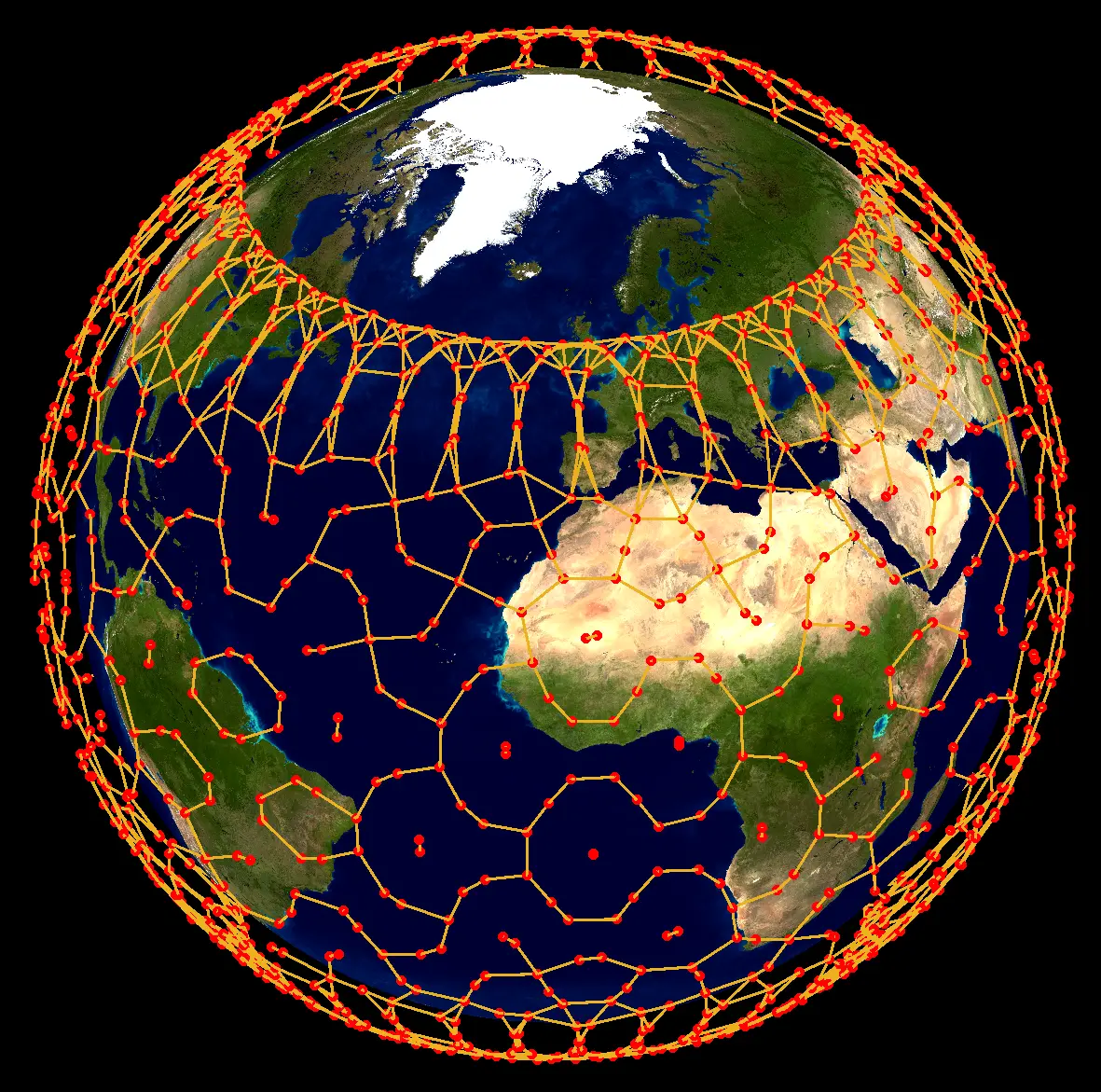
Distributed Design of Ultra Large-Scale Control Systems: Progress, Challenges, and Prospects
Leonardo Pedroso, Pedro Batista and W.P.M.H. Heemels
Annual Reviews in Control, 2025


Abstract
The transition from large centralized complex control systems to distributed configurations that rely on a network of a very large number of interconnected simpler subsystems is ongoing and inevitable in many applications. It is attributed to the quest for resilience, flexibility, and scalability in a multitude of engineering fields with far-reaching societal impact. Although many design methods for distributed and decentralized control systems are available, most of them rely on a centralized design procedure requiring some form of global information of the whole system. Clearly, beyond a certain scale of the network, these centralized design procedures for distributed controllers are no longer feasible and we refer to the corresponding systems as ultra large-scale systems (ULSS). For these ULSS, design algorithms are needed that are distributed themselves among the subsystems and are subject to stringent requirements regarding communication, computation, and memory usage of each subsystem. In this paper, a set of requirements is provided that assures a feasible real-time implementation of all phases of a control solution on an ultra large scale. State-of-the-art approaches are reviewed in the light of these requirements and the challenges hampering the development of befitting control algorithms are pinpointed. Comparing the challenges with the current progress leads to the identification and motivation of promising research directions.
BibTeX
@article{PedrosoBatistaEtAl2025ULSS,
author = {Leonardo Pedroso and Pedro Batista and W. P. M. H. Heemels},
title = {Distributed design of ultra large-scale control systems: Progress, Challenges, and Prospects},
journal = {Annual Reviews in Control},
year = {2025},
volume = {59},
pages = {100987},
doi = {10.1016/j.arcontrol.2025.100987}
}
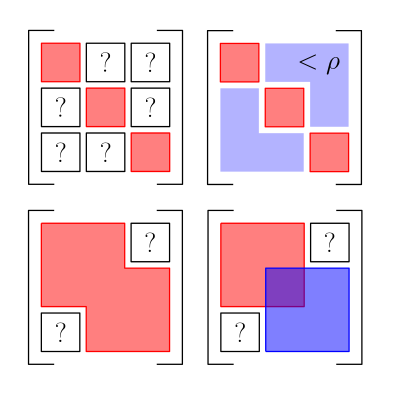
Leonardo Pedroso, Pedro Batista and W.P.M.H. Heemels
arXiv preprint, 2026
Abstract
Emerging large-scale engineering systems rely on distributed fusion for situational awareness, where agents combine noisy local sensor measurements with exchanged information to obtain fused estimates. However, at the sheer scale of these systems, tracking cross-correlations becomes infeasible, preventing the use of optimal filters. Covariance intersection (CI) methods address fusion problems with unknown correlations by minimizing worst-case uncertainty based on available information. Existing CI extensions exploit limited correlation knowledge but cannot incorporate structural knowledge of correlation from multiple sources, which naturally arises in distributed fusion problems. This paper introduces Overlapping Covariance Intersection (OCI), a generalized CI framework that accommodates this novel information structure. We formalize the OCI problem and establish necessary and sufficient conditions for feasibility. We show that a family-optimal solution can be computed efficiently via semidefinite programming, enabling real-time implementation. The proposed tools enable improved fusion performance for large-scale systems while retaining robustness to unknown correlations.
BibTeX
@misc{PedrosoBatistaEtAl2026OCI,
author = {L. Pedroso and P. Batista and W. P. M. H. Heemels},
title = {Overlapping Covariance Intersection: Fusion with Partial Structural Knowledge of Correlation from Multiple Sources},
note = {arXiv preprint arXiv:2603.16768},
year = {2026},
doi = {10.48550/arXiv.2603.16768}
}

Evolutionary Dynamics in Continuous-time Finite-state Mean Field Games: Equilibria and Stability
Leonardo Pedroso, Andrea Agazzi, W.P.M.H. Heemels, Mauro Salazar
arXiv preprint, 2025
Abstract
We study a dynamic game with a large population of players who choose actions from a finite set in continuous time. Each player has a state in a finite state space that evolves stochastically with their actions. A player's reward depends not only on their own state and action but also on the distribution of states and actions across the population, capturing effects such as congestion in traffic networks. While prior work in evolutionary game theory has primarily focused on static games without individual player state dynamics, we present the first comprehensive evolutionary analysis of such dynamic games. We propose an evolutionary model together with a mean field approximation of the finite-population game and establish strong approximation guarantees. We show that standard solution concepts for dynamic games lack an evolutionary interpretation, and we propose a new concept - the Mixed Stationary Nash Equilibrium (MSNE) - which admits one. We analyze the relationship between MSNE and the rest points of the mean field evolutionary model and study the evolutionary stability of MSNE.
BibTeX
@misc{PedrosoAgazziEtAl2025MFGAvg,
author = {Leonardo Pedroso and Andrea Agazzi and W. P. M. H. Heemels and Mauro Salazar},
title = {Evolutionary Dynamics in Continuous-time Finite-state Mean Field Games - {Part I}: Equilibria},
note = {arXiv preprint arXiv:2511.01452},
year = {2025},
doi = {10.48550/arXiv.2511.01452}
}
🏅 Selected awards
| 2024 | Best MSc Thesis Award by the Portuguese Automatic Control Association. Read more... | |
|---|---|---|
| 2022 | Professor Jaime Campos Ferreira Award 2022 for effort, creativity, and ingenuity in mathematics. Read more... |